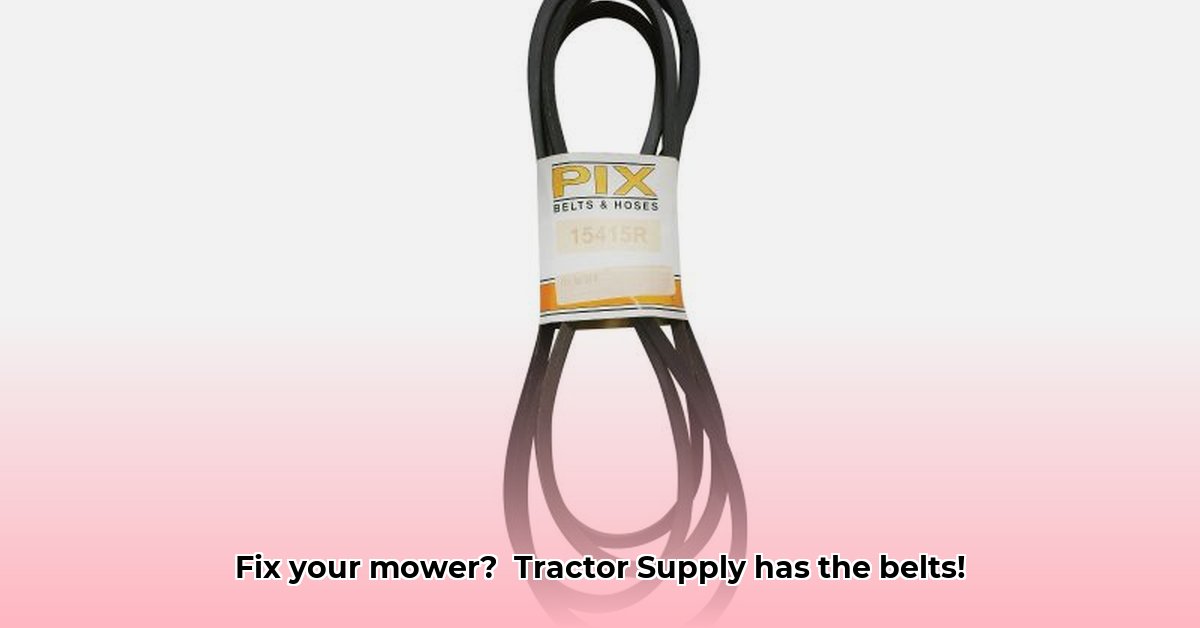
Keeping your lawnmower running smoothly is crucial for maintaining your property and saving you time and money. A key component often overlooked is the mower belt. This guide will show you how to select, install, and maintain mower belts from Tractor Supply, ensuring optimal performance and longevity. We’ll also explore efficient mowing techniques to further enhance your mower’s lifespan and reduce fuel consumption. For more detailed instructions, see our belt replacement guide.
Choosing the Right Mower Belt for Your Tractor
Before heading to Tractor Supply, gather essential information about your mower. Locate the make, model, and engine type – usually found on a sticker affixed to the machine. This information allows for precise belt selection. If the sticker is missing or illegible, don't worry. You can measure your old belt for an alternative approach.
Measuring Your Old Belt for Replacement
Carefully remove the old belt, ensuring you handle it gently to avoid any injury. Using a flexible measuring tape, take precise measurements of its length and width, recording these details for future reference. Note the type of belt (V-belt, cogged, etc.). Cross-referencing this information with your owner's manual can also be helpful in determining the precise type and size you need.
Step-by-Step Mower Belt Installation Guide
Replacing a mower belt is straightforward, but safety precautions are paramount. Always disconnect the spark plug before commencing any work.
Step 1: Gather Your Supplies: You'll need your new Tractor Supply mower belt, work gloves, and potentially a belt-tensioning tool (consult your owner's manual).
Step 2: Access the Belt: Locate the belt's pathway. This usually involves removing a deck cover or other access panel. Consult your mower's manual for specific instructions; taking your time during this stage ensures accuracy and avoids potential damage.
Step 3: Remove the Old Belt: Carefully remove the old belt from the pulleys. If the belt is stubborn, gently work it free; avoid forcing it, which could lead to damage.
Step 4: Install the New Belt: Carefully align the new belt with the old belt's pathway, ensuring it sits correctly on each pulley. Double-check your work to prevent the need for restarting the process.
Step 5: Tension the Belt: Adjust the belt tension to the manufacturer's specifications, as detailed in your owner's manual. A properly tensioned belt will prevent slippage and ensure optimal performance.
Step 6: Reconnect and Test: Reassemble all components, reconnect the spark plug, and start the engine. Listen carefully for any unusual sounds; smooth operation indicates successful installation.
Maintaining Your Mower Belt for Longer Life
Regular maintenance significantly extends a mower belt's lifespan.
Regular Inspections: Conduct periodic inspections, checking for cracks, fraying, or a glazed appearance. These signs indicate wear and necessitate replacement.
Cleaning: Keep the belt clean. Dirt and debris can cause premature wear. A simple brush cleaning keeps the belt in top condition.
Proper Storage (For Spare Belts): If storing a spare belt, maintain a cool, dry environment to prevent degradation. Proper storage protects your investment.
Troubleshooting Common Mower Belt Issues
Addressing common problems promptly avoids downtime and costly repairs.
Belt Slippage: Often indicates loose tension or worn pulleys. Check tension and inspect pulleys for damage or wear.
Belt Breakage: Usually caused by excessive tightness, debris, or old age. Replace the belt immediately.
Tips for Efficient Mowing to Reduce Fuel Consumption
Efficient mowing practices minimize fuel consumption and reduce your environmental impact; a win-win situation.
Sharp Blades: Dull blades require significantly more power, thereby increasing fuel consumption. Regular sharpening or replacement is key.
Proper Mowing Height: Taller grass needs less frequent mowing and minimizes moisture loss.
Avoid Overlapping: Strategic mowing minimizes wasted fuel and improves efficiency.
How to Reduce Greenhouse Gas Emissions from Small-Scale Sustainable Farming: Maintaining Your Tractor Supply Mower Belt for Efficient Mowing
Maintaining your mower belt efficiently directly contributes to reduced greenhouse gas emissions. Through careful selection, installation, and routine maintenance, you can optimize your mower's performance and minimize its environmental impact.
Key Takeaways:
- Proper belt maintenance directly enhances fuel efficiency.
- Regular inspection, timely replacement, and correct installation are crucial.
- Efficient mowing techniques—such as avoiding overlapping passes—further reduce fuel consumption.
This comprehensive guide empowers you to effectively maintain your Tractor Supply mower belts, ensuring your lawnmower's optimal performance while contributing to sustainable practices. Remember to consult your owner's manual for specific instructions tailored to your mower model.